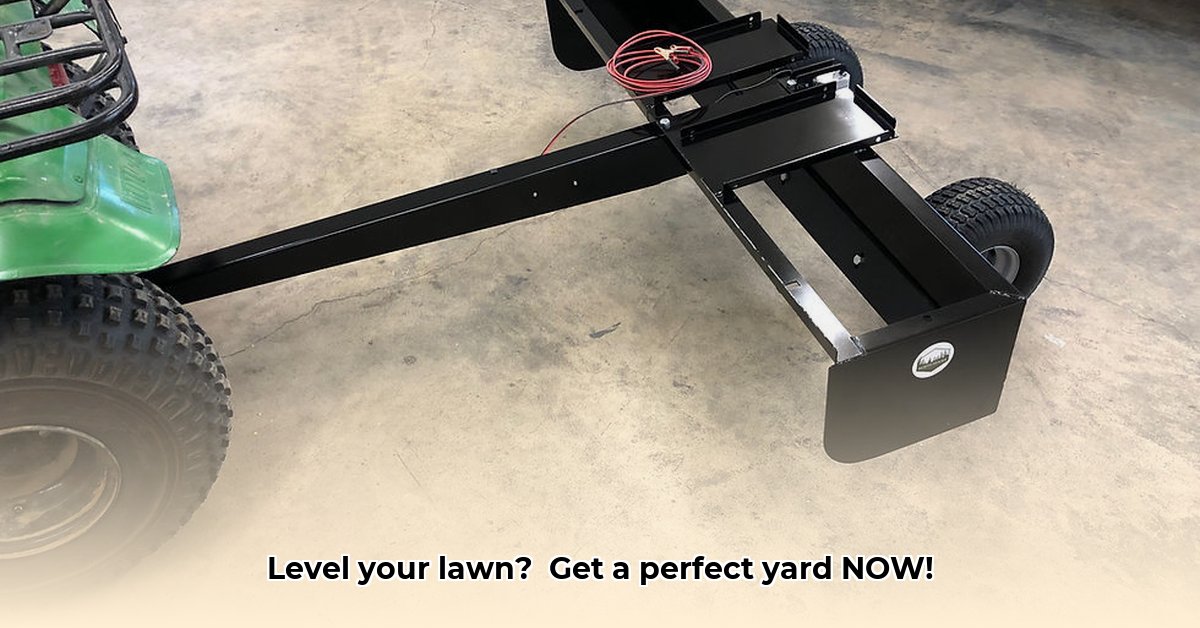
Ready to transform your bumpy lawn into a smooth, even expanse? A box grader attachment for your lawn tractor is the perfect solution. This comprehensive guide will walk you through every step, from selecting the right grader to maintaining it for years of perfect lawn-leveling service. Say goodbye to uneven patches and hello to the perfectly level lawn you’ve always dreamed of! For more information on lawn tractor attachments, check out this helpful resource: Kubota Lawn Tractor Attachments.
Choosing the Right Box Grader
Selecting the appropriate box grader is crucial for success. Just as you wouldn't use a screwdriver to hammer a nail, choosing the wrong grader can lead to frustration and subpar results. Consider these key factors:
- Lawn Size: Larger lawns will benefit from wider box graders to cover more ground efficiently. A smaller grader, perfect for small yards, will simply take longer for larger areas.
- Tractor Capacity: Your lawn tractor has a weight limit for attachments. Always ensure the box grader's weight remains well within your tractor's capacity. Exceeding this limit is dangerous and can damage your tractor. Consult your tractor's manual for the maximum safe weight.
- Compatibility: Not all box graders are created equal. Verify that the box grader is compatible with your specific lawn tractor make and model. Check the manufacturer's website or packaging for compatibility information.
- Features: Higher-end models may offer adjustable width and depth settings, increasing versatility. Consider if these features justify the added expense based on your lawn's needs.
Attaching the Box Grader
Attaching the box grader typically involves these steps (always refer to your tractor's and box grader's manuals for precise instructions):
- Engage Three-Point Hitch: This system on your tractor lifts and lowers the box grader. Engage it following your tractor's instructions (usually a lever or hydraulic control).
- Align and Connect: Carefully align the hitch pins on the box grader with your tractor's three-point hitch receiver points.
- Secure Connections: Firmly fasten pins with cotter pins or clips. Double-check they won't loosen during operation.
- Lower the Box Grader: Gently lower the box grader using the three-point hitch controls. It should rest evenly on the ground, parallel to the surface.
Operating Your Box Grader
Operating the box grader is surprisingly intuitive. Begin slowly to get acquainted with its handling.
Depth Adjustment
Use your tractor's levers or hydraulic controls to adjust depth. Start shallow, especially if unsure. You can always increase depth later but reducing depth is more challenging. Gradual adjustments are key to even leveling.
Speed Control
Maintaining a consistent, moderate speed is vital. Going too fast results in uneven grading and potential lawn damage. Too slow, and the project takes an unnecessarily long time. Find a balance that provides a smooth finish without excessive time investment.
Multiple Passes
For severely uneven lawns, multiple passes may be needed. Slightly overlapping passes ensures uniform coverage; think of it like painting—overlapping strokes ensure even color.
Adjusting Depth and Speed for Optimal Results
Depth significantly impacts results. Shallow settings suffice for minor bumps; deeper settings tackle significant unevenness or seedbed creation. Experiment to find the optimal depth. Remember that overly deep settings will remove considerable amounts of soil.
Speed impacts smoothness and evenness. Slower speeds offer more control (ideal for large bumps or ruts). Faster speeds increase efficiency, especially for less uneven lawns. Find the balance between efficiency and quality.
Maintaining Your Box Grader
Proper maintenance prolongs the box grader's life. After each use:
- Clean Thoroughly: Remove all grass clippings and debris using a stiff brush or pressure washer.
- Inspect for Damage: Check for bent or damaged parts; address any issues immediately.
- Lubricate: Lubricate moving parts according to the manufacturer's instructions to prevent rust and ensure smooth operation.
- Store Properly: Store it in a dry, sheltered place to prevent rust and corrosion.
Troubleshooting
Even with careful operation, problems may arise. Here are common solutions:
- Uneven Grading: Check depth settings, ensure level positioning, and overlap passes. Multiple passes may be required for severely uneven lawns.
- Tractor Struggles: Reduce depth, remove excess debris, or ensure the tractor maintains an appropriate speed.
- Inconsistent Leveling: Check alignment and secure all connections.
Safety Precautions
Safety is paramount.
- Protective Gear: Always wear safety glasses or goggles and sturdy, closed-toe shoes.
- Clear the Area: Remove all obstacles before operation.
- Keep Children and Pets Away: Never operate near children or pets.
- Mindfulness: Pay close attention to your surroundings and adjust speed and depth as needed.
Is a Box Grader Right for You?
A box grader offers significant advantages but also has some limitations. Weighing the pros and cons will help you determine its suitability for your situation.
Pros: Creates a perfectly level lawn, improves drainage and aeration, prepares ideal seedbeds, and enhances overall lawn health.
Cons: Requires a lawn tractor, may be initially challenging to master, needs regular maintenance and cleaning, and involves an initial investment cost.
By following this guide, you'll be well on your way to achieving the perfectly level lawn you've always desired. Remember: patience, attention to detail, and regular maintenance are key to long-term success.